
Every sign that leaves our building in Williamsburg has a story that nobody tells.
We talk a lot about design, fabrication, and installation. Those are the visible parts. The photogenic parts. What almost nobody thinks about is the stretch in between: the part where a 30-foot sign weighing several hundred pounds has to survive a few thousand miles of American highway and arrive looking exactly like it did when it left the shop.
That is the shipping department's job. This week is National Trucker Appreciation Week, so we sat down with the three people who make it happen every day, plus one of the freight brokers we have worked with for years, to find out what actually goes on back there.
Fair warning: it is more interesting than you think.
That is not marketing language. That is Bill, and he means it literally.
The packaging of signage is a science. Signage is one of the most fragile items transported on the highways.
Here is the number that puts it in perspective. The industry standard for freight damage sits at 1.25%. Dualite runs below that.
If you have never thought about why that is hard, consider what we are actually shipping. Individual letters mounted on a raceway, most with acrylic faces. Long, large, and relatively lightweight, which creates a problem nobody outside the industry would guess at. As Tonya put it, these are the trickiest pieces we make. And because they look big, receiving companies often reach for large forklift equipment to move them.
They do not need it. And using it can do real damage.
Meanwhile the opposite problem exists too. Bill again:
We have shipped signage 30 feet long that weighs several hundreds of pounds.
Long and light. Long and heavy. Sometimes fragile enough that the wrong forklift ruins it. That is the range, and every single load has to be figured out individually.
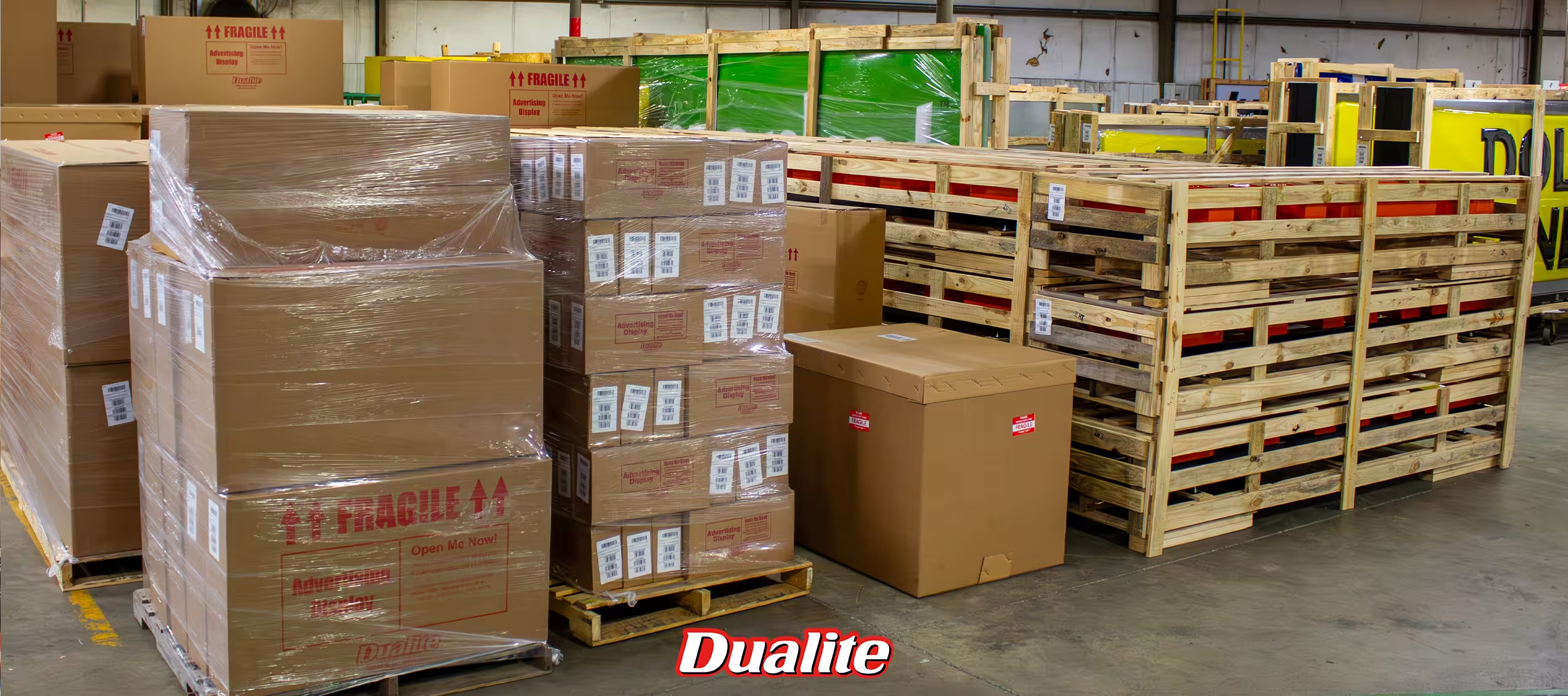
Brandon handles the volume side, and the numbers are bigger than most people assume:
The range of what goes on those trucks runs from large corporate signage down to small indoor pieces. There is no standard load.
To move all of it, we use a mix. Third-party logistics and asset-based companies handle direct shipments. We hold contracts with several less-than-truckload carriers for everything else. And as Tonya added, we do not stop at trucks.
We ship by air, land, and sea.
Which raises an obvious question: what is the farthest a Dualite sign has ever traveled?
Brandon and Tonya answered without hesitation. Indonesia.
Oversized freight is where shipping usually turns into a nightmare of permits, escort vehicles, and route restrictions. Dualite mostly avoids that, and the reason is upstream.
Bill explained it this way. The legal Department of Transportation height limit is 13 feet 6 inches. Our sales and engineering teams make sure sign components stay under 12 feet 6 inches in height and never exceed 8 feet in width.
That one design discipline means we rarely need special permits and road restrictions have not been a significant issue for us. Occasionally we still need specialized equipment with loading decks at 12 inches, but the hard problems get solved before a truck is ever booked.
This is also why shipping and production talk constantly. As the team described it, the three of them are in continuous communication and collaboration, and shipment plans are typically decided before production is even finished.
The sign is not an afterthought handed to shipping. Shipping is in the conversation the whole time.
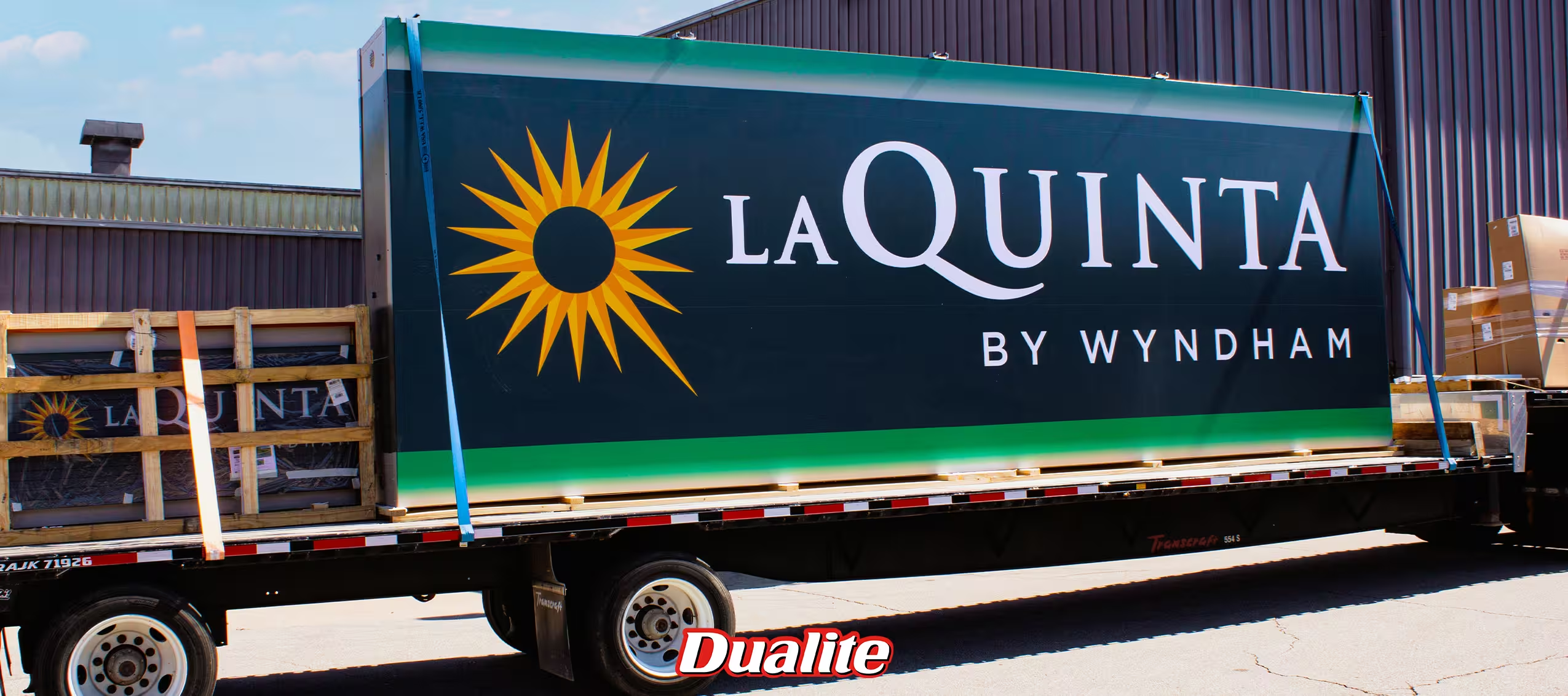
Ask anyone in logistics about weather and you get a more complicated answer than "it rains sometimes."
Brandon pointed out something most people miss. A truck can face serious delays from snow or ice on one leg of its route even when conditions are perfectly clear both here and at the delivery point. The weather that ruins your delivery is often weather nobody involved ever sees.
Bill took it a step further, to the disruptions that reach well past the storm itself:
Hurricanes and other natural disasters can cause significant disruptions. In addition to the obvious areas impacted, the availability of trucks is reduced as necessary supplies are being transported to affected regions.
When a region gets hit, trucks get pulled toward relief. That ripples out across every shipment in the country, including yours.
Almost every truck carrying a Dualite sign is driven by a contracted carrier or a driver sourced through a broker. They are not our employees, but our reputation rides with them on every load.
So we asked Tyson Pollard of King of Freight, a broker who has coordinated Dualite shipments for about seven years, what it takes to move our freight well.
Signs can be much more involved than typical freight. They come in different sizes, shapes and configurations, so there isn't always a one-size-fits-all solution. You have to consider dimensions, weight, loading and unloading capabilities, trailer type, securement, delivery location and sometimes specialized equipment.
Tyson is not behind the wheel himself, but after seven years of working with drivers and carriers every day, his answer to what he wished more people understood about them was the most important thing anyone said to us all week:
A driver is dealing with traffic, weather, construction, hours-of-service regulations, appointment times and unexpected delays while still being expected to deliver safely and on time. When something goes wrong, the driver is often the person everyone looks to, even when the situation is completely outside their control. Good professional drivers deserve a lot of respect.
That is the whole reason this week exists.
His advice for anyone considering the career says a lot about what actually separates a good carrier from a bad one:
Understand that professional trucking is much more than driving from Point A to Point B. Reliability, communication and professionalism matter tremendously. Build that reputation and people remember you.
Our team agrees, and their standard is refreshingly simple. Brandon's definition of a good carrier: picks up and delivers on time, with effective communication. Tonya's version is shorter. Good carriers with competitive rates win the loads.
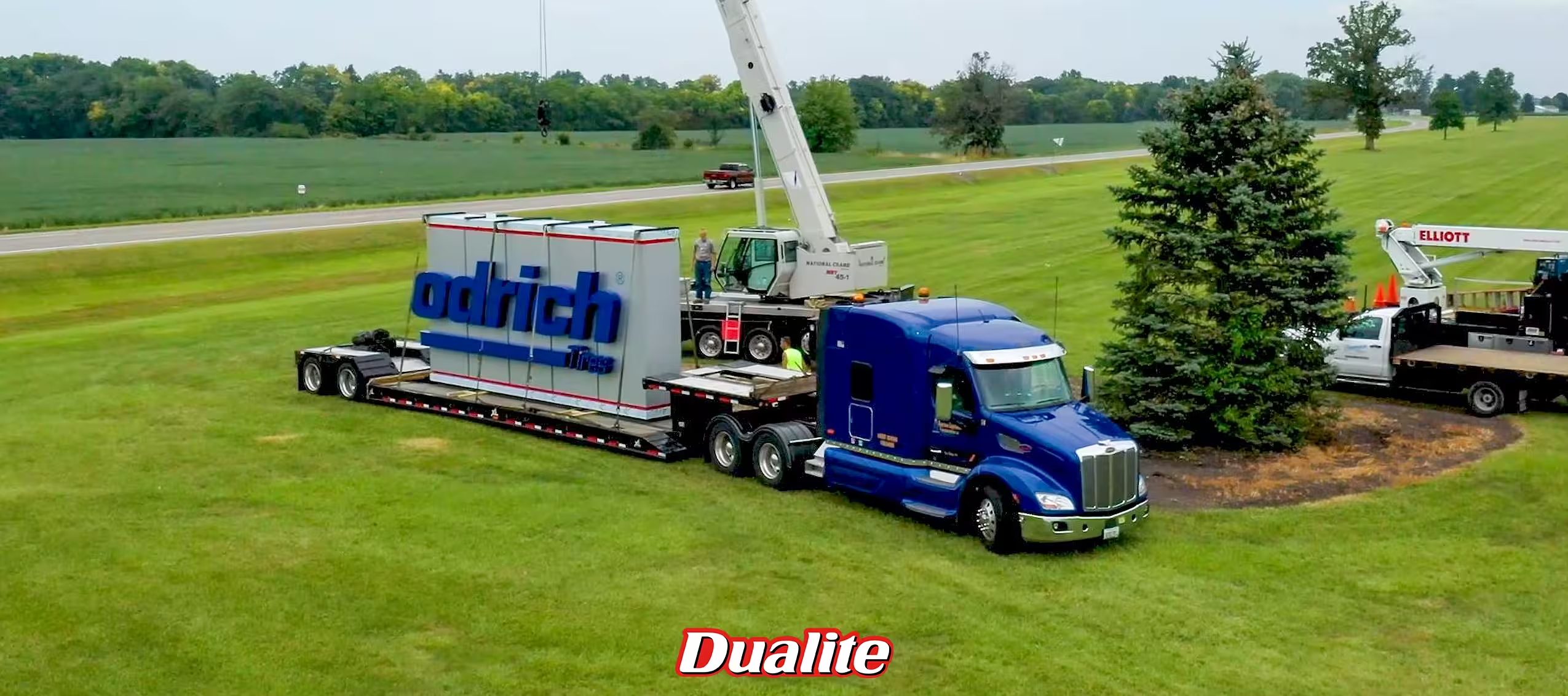
Not every shipment goes smoothly, and some go wrong in ways you cannot plan for.
Bill told us about a truck that left the facility and made it a few blocks before dispatch called for help. The driver had turned down a street marked "no trucks" and was now wedged under a tree.
The town had to send a truck out to free him.
He made it maybe three blocks into a shipment that was supposed to cross several states.
Tonya's favorite moment had nothing to do with a truck at all.
A corporate sign we built was installed at the top of a high-rise in Kentucky. The team received footage of a helicopter lifting the sign into place for the installation.
It made me very proud and truly made my day.
There are also the signs you have probably stood in front of without knowing it. When we asked for the most memorable destination, Tonya went straight to the signage at Cincinnati Reds Stadium.
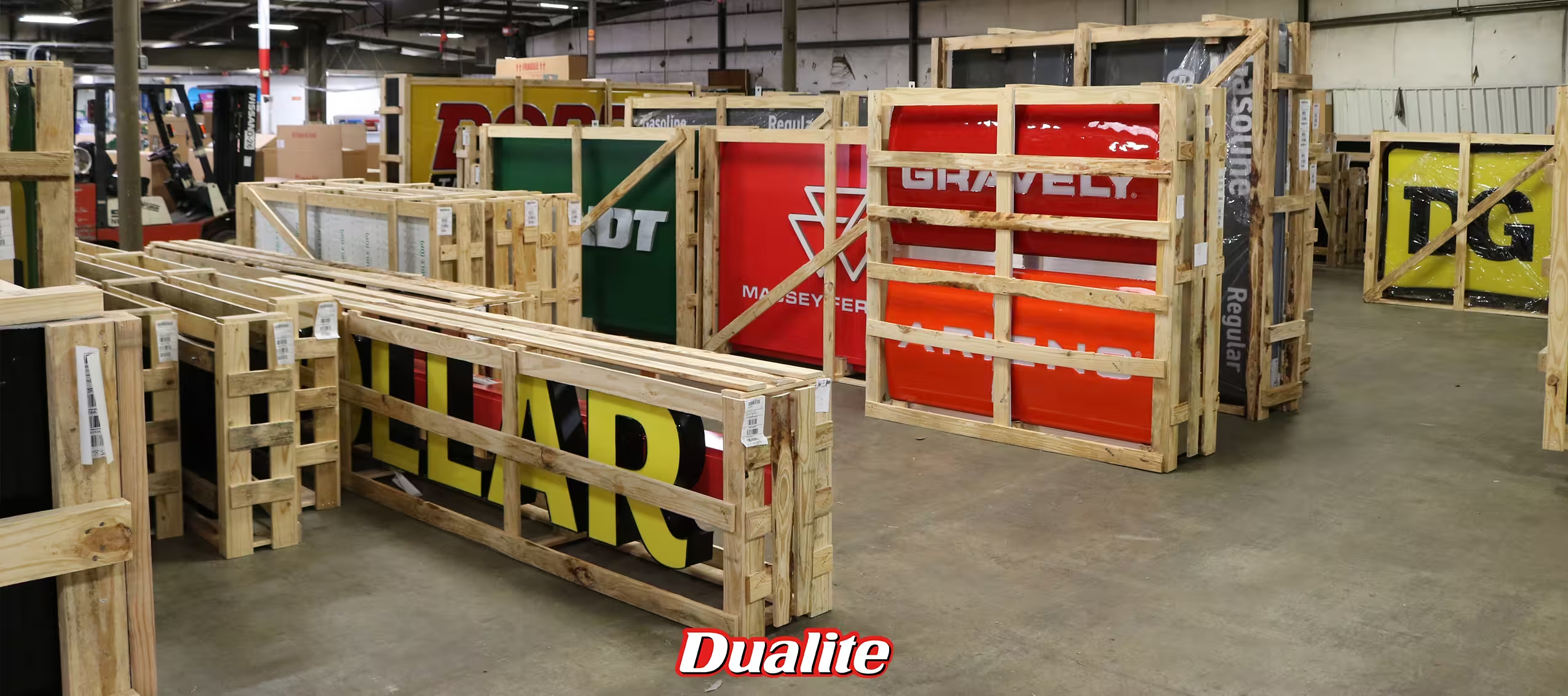
We asked all three, and the answers landed in the same place from three different directions.
Bill:
The shipment of the product ties together the efforts of all departments within our company.
Brandon:
We are the final in-house inspection team, and our role is crucial to ensure that the product functions correctly and meets its expected appearance.
Tonya, who has worked in other departments here:
I now understand how important this department is to the company.
Brandon also named the part of the job nobody sees:
Shipments are constantly changing, addresses, carriers, rates. Just when you think everything is set, something happens to change the load, and we scramble to ensure it stays on time.
That scramble is invisible by design. When it works, the customer just sees a sign that showed up when it was supposed to.
Which brings us to the answer that best explains why this team is good at what they do. We asked Bill what he would want customers to know about how their sign gets to them:
We value their product and think of it as if we are personally ordering something valuable, with certain expectations for how and when it will arrive.
That is the standard. Every load, every week, roughly a hundred times over.
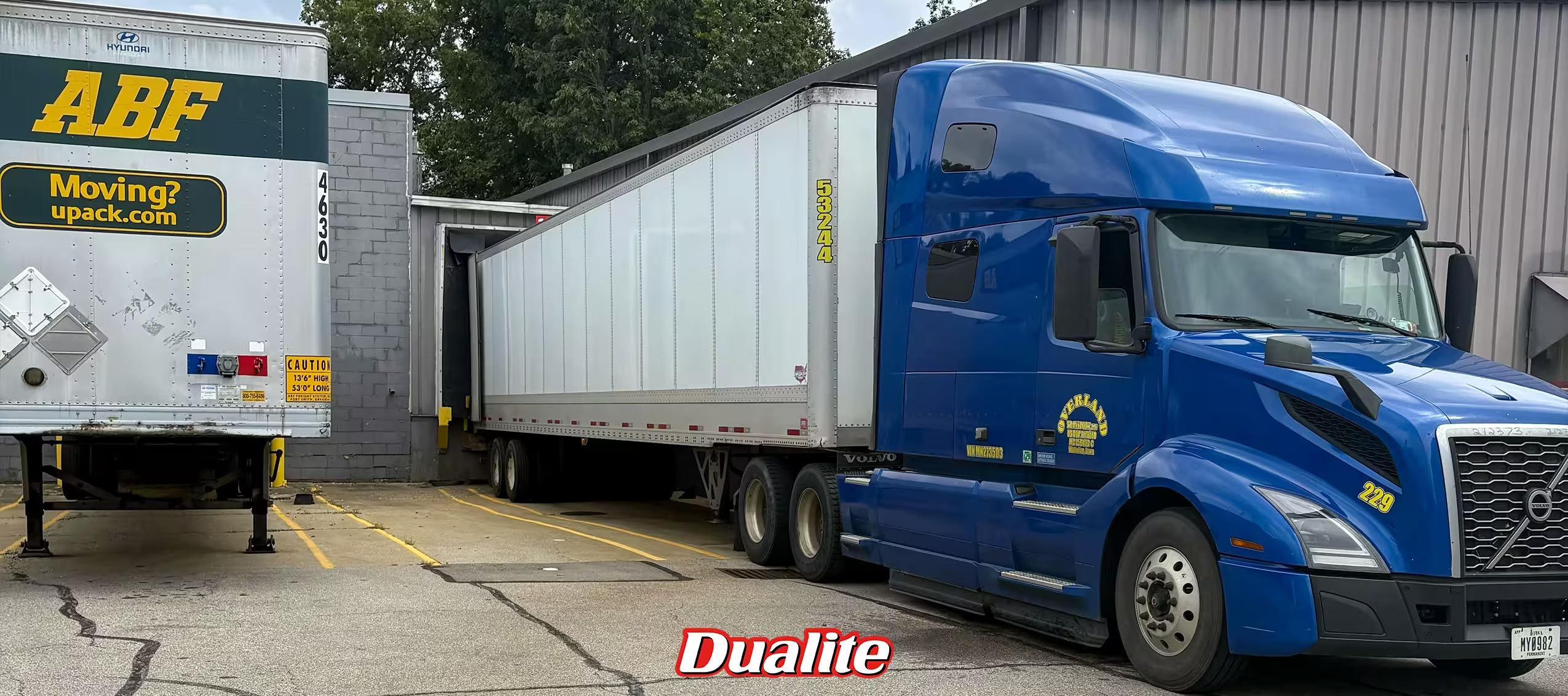
To every contracted driver and carrier partner who has hauled a Dualite sign through snow, construction, hurricane detours, and the occasional low-hanging tree: thank you.
You are the last step between our shop floor and a customer's grand opening. We notice.
Happy National Trucker Appreciation Week.
📞 513-724-7100
📧 sales@dualite.com
🌐 www.dualite.com