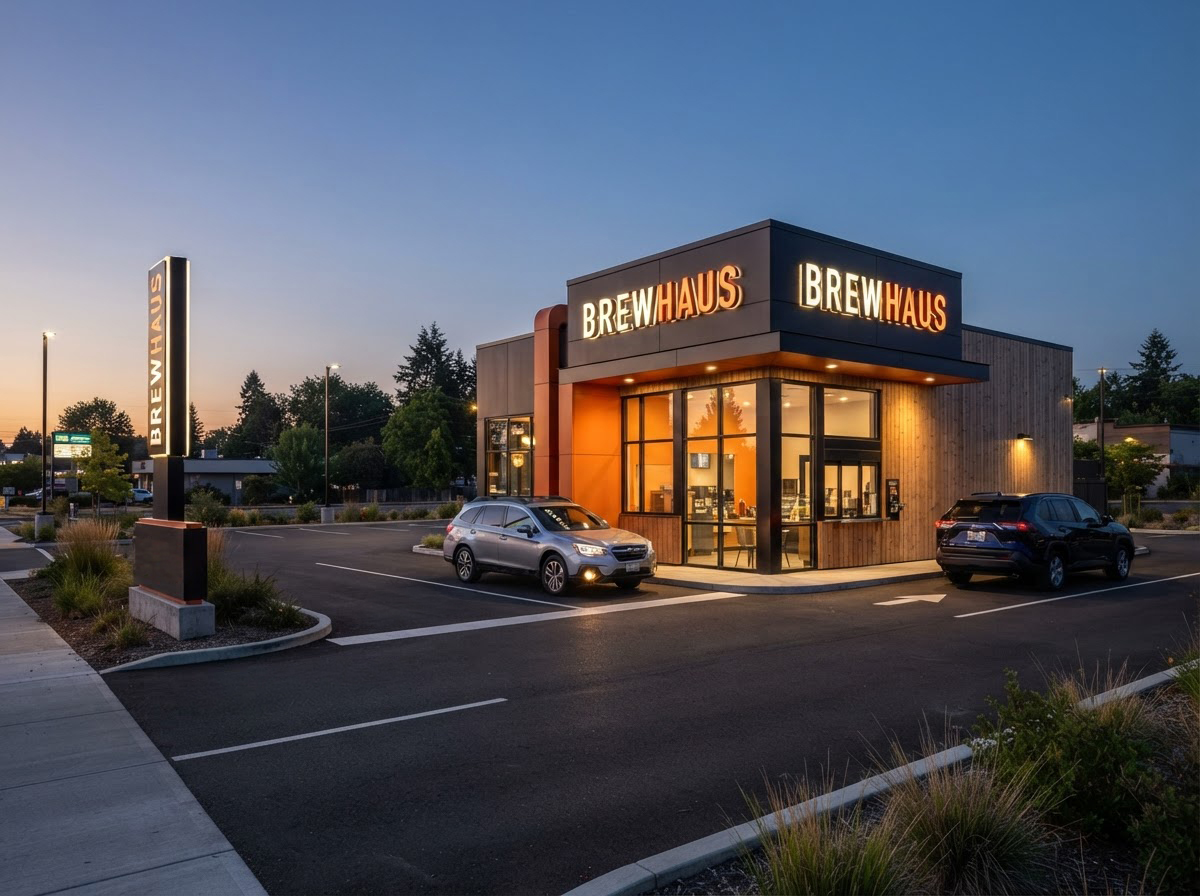
Drive-thru coffee is one of the fastest-growing categories in American retail right now. Chains like 7 Brew, Dutch Bros, Scooter's Coffee, Black Rock Coffee Bar, Biggby Coffee, Aroma Joe's, Ziggi's Coffee, Ellianos Coffee, and Swig are opening new locations by the dozens every month, some pushing toward hundreds of new sites a year as they race to capture market share in nearly every region of the country. That kind of growth puts real pressure on every operational function behind the brand, and signage is usually the one that feels it first.
A lease gets signed, construction starts, and an opening date gets set months in advance. But signage involves design approval, code research, permit submission, manufacturing, and installation, all of which have to happen across a different city or county for every single location. When a brand is opening one store a year, that process is manageable with a handful of local vendors. When a brand is opening one store a week, using a different local sign shop in every market creates real problems: inconsistent branding from site to site, permit delays that push back opening day, and no single point of accountability when something falls behind schedule.
This is the exact challenge facing today's fastest-growing coffee concepts. The brands that scale successfully treat signage as infrastructure, not decoration, and they build it around a partner who can move at the same speed they are.
A national signage partner that owns design, manufacturing, permitting, and installation in-house solves all four of these at once, because it's one team accountable for the whole program instead of dozens of local vendors accountable for none of it.
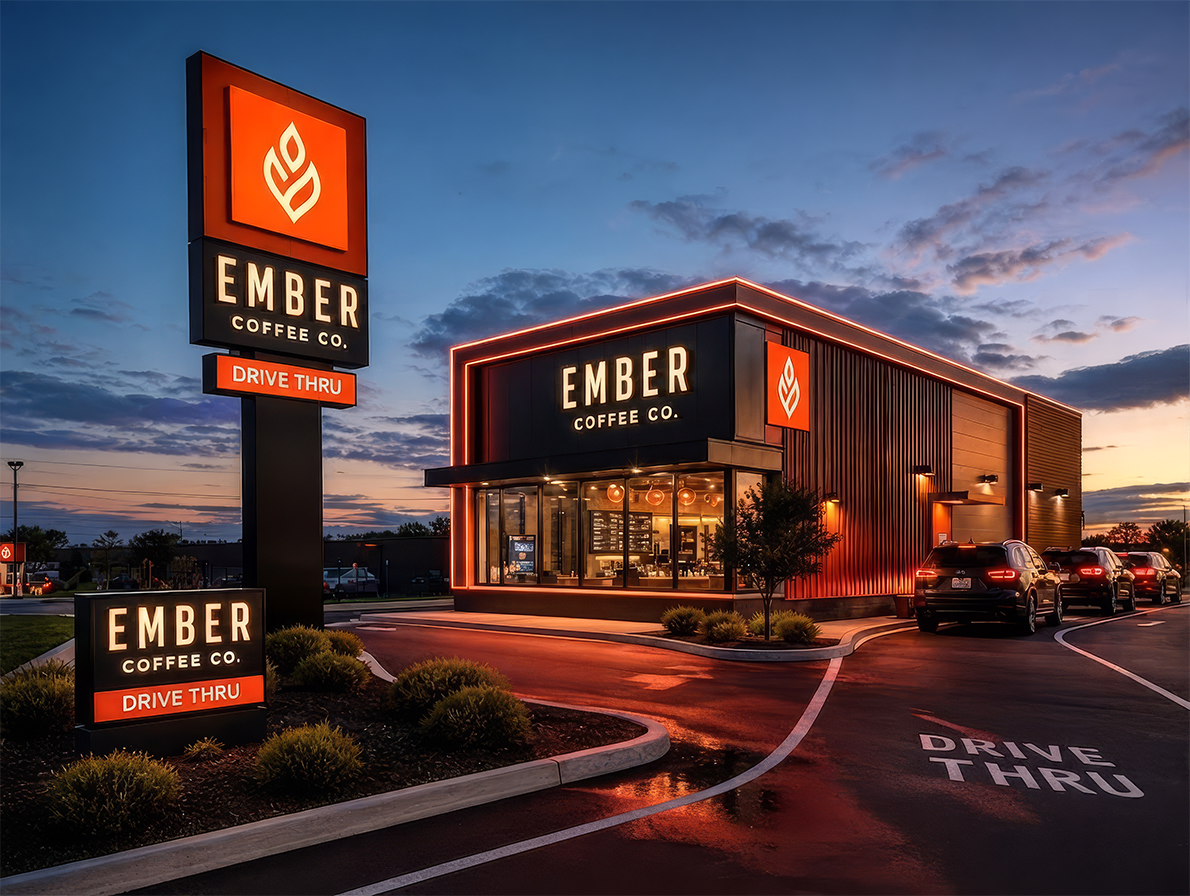
Most people outside the industry think "signage" means one sign. A real drive-thru coffee program is a system:
A partner who can deliver all of this under one program, rather than piecing it together from separate vendors for each element, is what actually keeps a fast-growing brand from having 500 slightly different-looking locations.
A signage partner with in-house design, manufacturing, and permitting can compress the timeline significantly compared to coordinating separate local vendors in every market, because there's no handoff delay between steps.
Yes. It requires a dedicated process for site audits, code research, permit procurement, and variance or design review board meetings in each jurisdiction, which is exactly the kind of repeatable, high-volume work a national signage partner is built around.
A pylon sign is elevated on a pole or structure so it's visible from the road at a distance. A monument sign sits low to the ground, usually near the entrance, and works at close range as customers pull in.
Signage gets a location noticed during the day. Architectural LED lighting is what makes a building recognizable and inviting after dark, which matters even more for a drive-thru format that depends on early morning and evening traffic.
Whether a coffee concept is opening its next ten locations or its next thousand, the brands playing the long game, including established names like Caribou Coffee, Peet's Coffee, Dunn Brothers Coffee, The Human Bean, The Coffee Bean & Tea Leaf, and Tim Hortons, know that consistent, code-compliant, on-brand signage isn't optional at scale. It's the thing that makes a hundred separate locations feel like one brand.
Dualite has spent 75 years building signage programs for national brands that need to move fast without losing consistency. See how we support drive-thru coffee and beverage brands or connect directly with Johnathan Brouwer to talk through what a program built for your growth pace looks like.
📞 513-724-7100
📧 sales@dualite.com
🌐 www.dualite.com